How to set up a Floyd Rose: 5 must-know tips

When a Floyd Rose won’t return to pitch, I check the setup and the points that hold the strings before assuming the bridge needs replacing. These are five things I pay attention to, including a bridge-angle preference I picked up from James Tyler’s approach to setup.
Watch my five setup tips on YouTube.
1. Check the bridge angle
Floyd Rose’s instructions call for the Original bridge’s baseplate to sit parallel to the top of the guitar. That’s the manufacturer’s starting point.
I prefer a slight forward tilt. James Tyler was a major influence on my work, and that preference came from his setup approach. When I asked Rich Renken about it, he described Jim’s idea as giving the tremolo a “memory” and some “pullback.” He compared it to leaning forward in a chair.
That’s the analogy Rich used to explain Jim’s preference. For a particular guitar, check whether it returns to pitch through the bends, dives and pull-ups you actually use. Inspect the nut and bridge hardware as well; the resting angle is only one part of the setup.
2. Check for movement at the nut
With the nut clamped, sound a string and gently press its length behind the nut. Listen for a change in the speaking string’s pitch. If it moves, inspect the clamps and the nut mounting instead of simply tightening everything harder.
Check that the nut itself is secure, the clamps sit correctly and the strings are supported properly. Dirt, worn contact surfaces or a poorly seated clamp can interfere with the grip. Use the correct tool and enough pressure to secure the parts without damaging the threads.
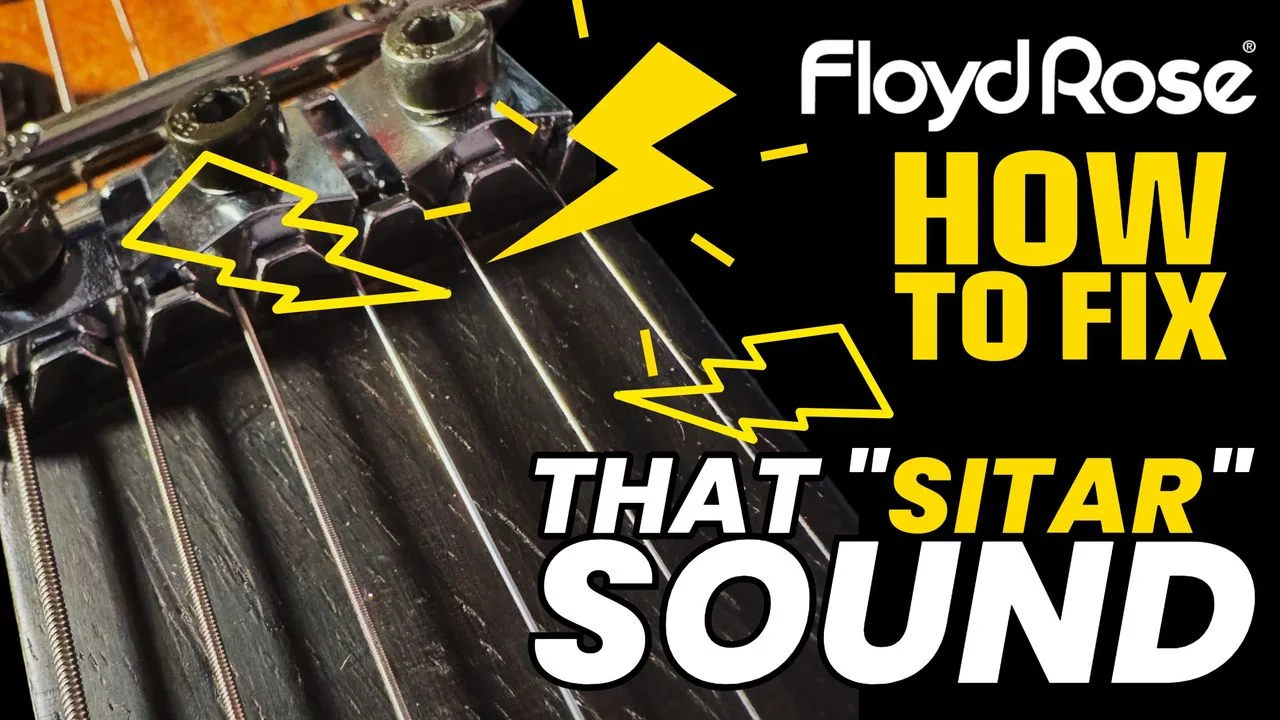
If the guitar has a retainer bar, check the string’s path across the nut before clamping. A string that meets the front of the nut but lifts off toward the rear needs attention. A sitar-like buzz can also come from poor contact; I’ve written separately about the locking-nut repair I use for that problem.
3. Keep the tuner windings tidy
I avoid piling unnecessary string around the tuner posts. I use one to one-and-a-half wraps where the tuner and string hold securely. The amount needed depends on the tuner and string, so follow the tuner manufacturer’s instructions and check that the string is secure.
This matters when tuning before the nut is clamped, and on guitars used without a locking nut. Once a locking nut is holding correctly, it isolates the speaking length from the tuner windings.
4. Secure the saddle intonation screws
After setting intonation, check that each saddle’s intonation screw is secure. A saddle that moves can’t hold its setting. The intonation screw fixes the saddle’s position; the string-clamping screw has a different job, holding the string in the saddle. Check both.
5. Settle the new strings before locking the nut
Gently stretch each new string, retune and repeat until it settles. Don’t yank hard enough to pull it out of its clamp. Leave the bridge’s fine tuners with room to adjust in both directions before locking the nut, then use them for the final tuning corrections.
Recheck the balance after adjustments
A floating bridge balances string tension against spring tension. Changing string gauge or tuning can change its resting angle. Relief, action and bridge angle also interact, so expect to retune and recheck your measurements as you work.
On an Original Floyd Rose, overall action is adjusted at the bridge posts. Individual saddle height isn’t adjusted with the small height screws found on a conventional Strat bridge; saddle-radius work may involve shims. Follow the instructions for your particular bridge.
Floyd Rose publishes a tuning procedure covering the spring balance and locking sequence. I take local electric guitar repair and setup work in Elkhorn. Email John with your guitar model, tuning and the problem you need help with.
For a new custom guitar, the build checklist covers bridge choice, tuning and the other specifications we discuss before ordering.